Student – Hi Lama la. I would like to raise an issue that I believe you previously addressed, but which I feel needs revisiting. I often hear friends using the word “god” in everyday conversation — for example, saying “by the grace of god” when hoping for a good outcome, or “thank god” when a problem has been avoided. When I ask whether they have adopted a theistic religion, some say it’s just a figure of speech, while others explain that they mean the Buddha or Guru Rinpoche. My wife thinks I’m being too pedantic and should let it go. Am I wrong to point out this inconsistency, or does language really matter in shaping belief and meaning?
Master – Language matters because it influences how we perceive the world. Take the Sanskrit word karuna. While it is often translated into English as compassion, the meanings diverge significantly. Karuna carries a Dharmic connotation: compassion grounded in wisdom, arising from insight into suffering and oriented toward its relief for all beings.
In contrast, the English word compassion usually refers to an emotional response of sympathy or concern, without the same universal or transformative depth. It also carries connotations of hierarchy, as if someone in a higher position is feeling pity for someone in a lower status or with lesser ability.
When we rely only on the English term, these undertones of superiority and pity risk distorting how we relate to the idea of karuna.
In the same way that translating karuna as compassion alters its meaning, referring to the Buddha as a god totally reshapes how we understand enlightenment itself.
Beyond their historical lives, the Buddha and Guru Rinpoche, who were born, taught, and departed, these figures ultimately reflect the nature of our own mind. To label them as gods imposes a theistic framework that can obscure their true significance as reflections of our innate potential for enlightenment.
If the Buddha and Guru Rinpoche are ultimately expressions of our own mind, why, then, do we cast their images in copper and gold and make offerings to them? These statues should not be worshipped as gods in a theistic sense. Rather, they function as skillful means — recognizable supports that help us connect with the qualities of awakening.
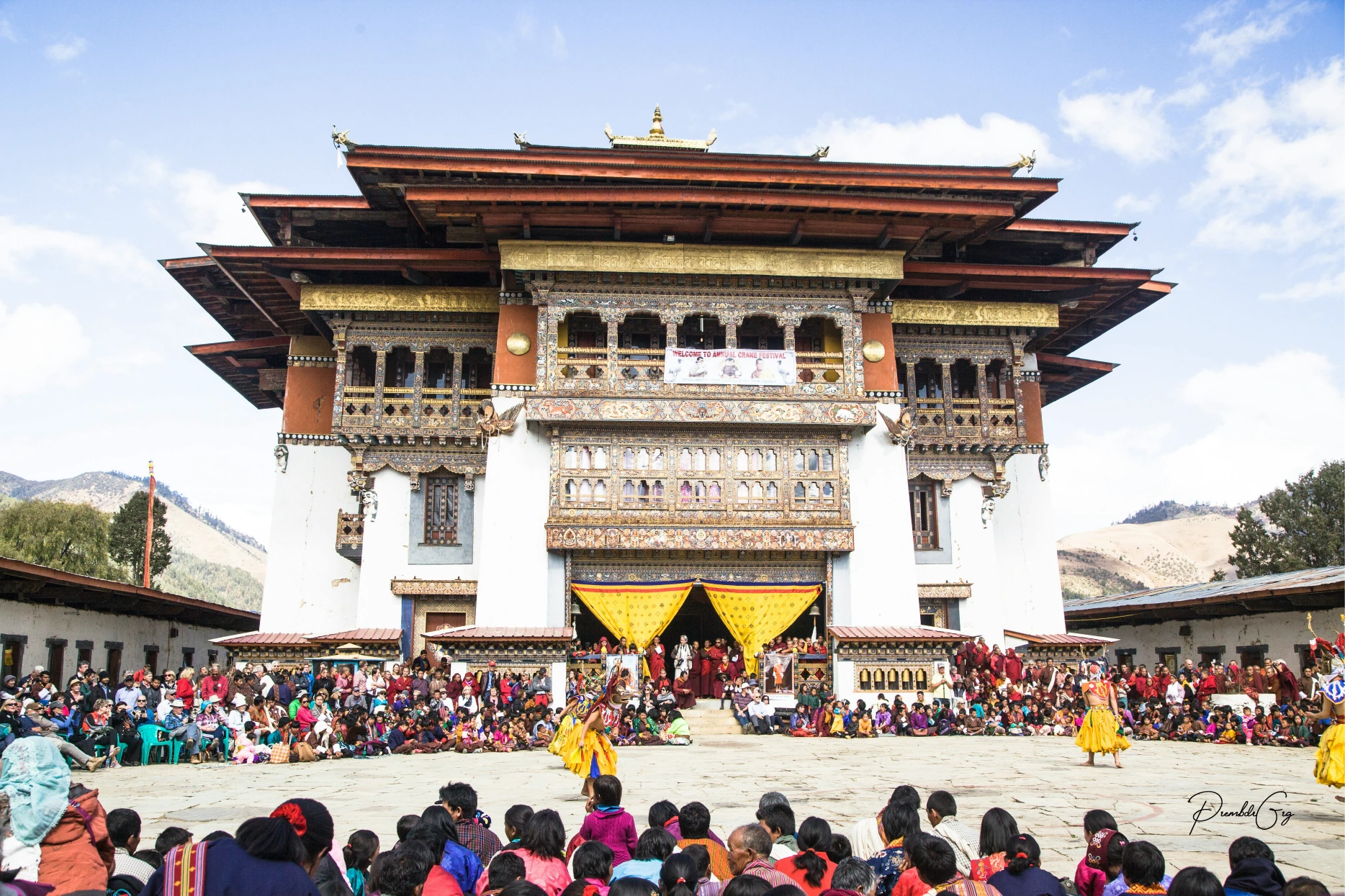
When we make offerings, we are not feeding a statue; we are cultivating devotion and learning to let go. Moreover, the external form is meant to function as a mirror, reminding us of our innate potential for enlightenment and guiding us toward the recognition that the awakened state is already within.
How does this work? Well, if people are told outright that their own mind and Guru Rinpoche’s mind are inseparable, most will struggle to accept or relate to such a claim. It may be grasped intellectually, but emotionally it can feel distant.
To bridge that gap, practitioners are often introduced to something solid and easily relatable — a statue. As their practice deepens and rigid notions of Guru Rinpoche as an external being begin to soften, the symbol may shift to a seed syllable. Later, it may be refined further into a mantra.
It is like a meal of thali. The ultimate aim is to enjoy the full dish, but for a child that would be overwhelming. So, the food is softened — this is the stage of the statue. As the child matures, the food is still softened, but offered in larger, more substantial portions — the seed syllable stage. Finally, when maturity is reached, the full thali can be received and digested. This is the recognition that we are none other than Guru Rinpoche or the Buddha.
So, while beginners may initially relate to the Buddha or Guru Rinpoche as external figures, the aim of practice is to realize inseparability from our own mind. Without this realization, practice is nothing more than theism clothed in Buddhist imagery rather than genuine Buddhism.
To instill in us the understanding that our nature and that of a realized being are inseparable, authentic visualization practices always conclude by dissolving the image of Guru Rinpoche or other realized beings into the heart, and finally into emptiness. The image is never left as a fixed, external figure; if it is, the practice ceases to be Buddhist.
So, although it may seem harmless to casually refer to the Buddha or Guru Rinpoche as a god in phrases like “by the grace of God,” such language is deeply misleading. When it permeates daily speech, it obscures the perception of realized beings, obscuring the essential truth that their nature and ours are one and the same, and in doing so, obstructs the very goal of practice, which is to dismantle our ordinary identity and assume the enlightened identity of the awakened being.
When it comes to correcting another’s errors of speech, the wisest response is often silence — and a quiet smile.
With close friends, however, you might gently make your point in a lighthearted way — “Oh, I didn’t realize you’d become Christian.” Even then, the tone matters. No one appreciates self-righteousness or those who present themselves as know-it-alls. Be careful not to assume that role. It benefits no one — least of all yourself.
In conclusion, language does matter — and while we need not rush to correct others, we can at least be mindful of our own words, refraining from using the word god when referring to Guru Rinpoche or the Buddha.