Student – Hi Lama la, I’m really fascinated by the lives of the mahasiddhas, and so could you share some insights into these remarkable yogis? I’m especially curious about why they often chose to live in charnel grounds and engage in behaviour that is so unconventional, even appearing mad. Thank you.
Master – The aim of Buddhist practice is to see reality and awaken from the illusion of samsara and nirvana — to become a Buddha. To achieve this, Buddhism offers many methods, one of which is the tantric path followed by the mahasiddhas.
What distinguishes tantric Buddhism from most other traditions is its radical embrace of emotion as a gateway to wisdom. Instead of suppressing emotions labeled as negative, tantric teachings treat them as expressions of pure energy.
This approach shifts the focus from avoidance to transformation. Through meditative techniques, these energies are not rejected but used skillfully to dismantle dualistic thinking and reveal the non-dual nature of reality, a state where distinctions like pure and impure, good and bad, sacred and profane dissolve into direct experience.
This logic can be illustrated by a fast-flowing river. Left unmanaged, it can flood and destroy. Managed well, it irrigates fields or generates electricity. At its core, it is simply water in motion — neither good nor bad. The value we assign to it depends on how we relate to it, not on anything inherent in the river itself.

Translator Keith Dowman wrote that “the [maha]siddhas were found in every part of the social structure: kings and ministers, priests and yogins, poets and musicians, craftsmen and farmers, housewives and prostitutes.” This observation highlights a key feature of the tradition: many mahasiddhas practiced in secret and did not fit the stereotypical image of a dreadlocked yogi meditating in a cave.
However, as you noted, many yogis lived in charnel grounds. Why? Because aspiring tantric practitioners must free themselves from conventional, dualistic views.
For this same reason, tantric practices, such as consuming alcohol or meat during ritual pujas, are not acts of indulgence. They are deliberate gestures aimed at challenging the belief that things are inherently impure.
By placing items culturally deemed inferior or unclean within a sacred context, practitioners confront and deconstruct the mental frameworks that sustain such judgments.
Consider this example: cow dung on a street in Thimphu is typically regarded as unsanitary waste. Yet in the rural villages of Kurtoe, it is prized as a source of fuel.
Likewise, a broken cup may appear worthless to someone whose cultural background and experiences limit its function to holding beverages. But, to an artist or an ikebana student, that same cup might hold greater value than a flawless one. These examples show that ideas of perfection and imperfection are not fixed truths. They are shaped by context, experience, and perception.

By practicing in places socially considered impure, or by engaging in actions deemed taboo, the yogi confronts and ultimately dissolves dualistic thinking of good and bad, pure and impure. As this mental divide fades, perception becomes clear, and they see reality. A tantric practitioner also works with the energies represented by the dakas and dakinis that inhabit such places.
In this way, a mahasiddha, transcends conventional boundaries, and so is no longer governed by social rules. He may appear perfectly ordinary or behave like a madman, but in either case, his actions arise from a place free of fear, shame, or attachment.
In contrast, most of us struggle to act authentically. Caught in dualistic thinking, we fear rejection, judgment, or ridicule — concerns that keep us from expressing our true selves. In extreme cases, some people can’t even bring themselves to serve coffee in a café or clean an office, purely because they’re afraid of being seen as inferior.
In truth, when we live according to social prejudices, we surrender our lives to the judgment of others. And when that happens, we are in a jail. We lose our freedom, which condemns us to suffering — the very condition the Buddha identified in the First Noble Truth.
Put another way, rigid biases, those that lead us to treat certain objects, roles, or people as inherently bad or inferior, distort our perception of reality. It’s like wearing tinted glasses that make everything appear the same, unchanging colour.
This distortion affects how we see things and others. When we label someone as “angry” or “jealous,” we risk mistaking a fleeting emotion for a permanent and inherent trait.
However, if this were the case, these characteristics would appear every moment from birth to death, but they don’t. Instead, they arise, shift, and fade, revealing their impermanence. Like mud on a diamond, these obscurations can be cleared, allowing a person’s innate Buddha nature — their basic goodness — to shine through.
How does a mahasiddha function as a guru? Imagine a society that has forgotten how to laugh. Teachers gather to explain the mechanics of laughter and its philosophical significance. Students take notes and nod thoughtfully.
Then one day, an unorthodox teacher arrives. He offers no explanation. He simply behaves like a fool. Unexpectedly, someone laughs, then another. Soon, everyone is roaring with laughter.
In the Dharma context, this teacher is a mahasiddha, someone who channels wisdom in unconventional ways defying tradition, yet effectively awakens deluded beings like us.
When working with others, mahasiddhas are pliable like gold, a substance that can be shaped into whatever best serves others: eating utensils, jewelry, or statues. In the same way, these realized beings adapt their appearance and behaviour to suit the needs of the situation. They may appear wrathful or peaceful, conventional or wild, whatever awakens and benefits those they encounter.
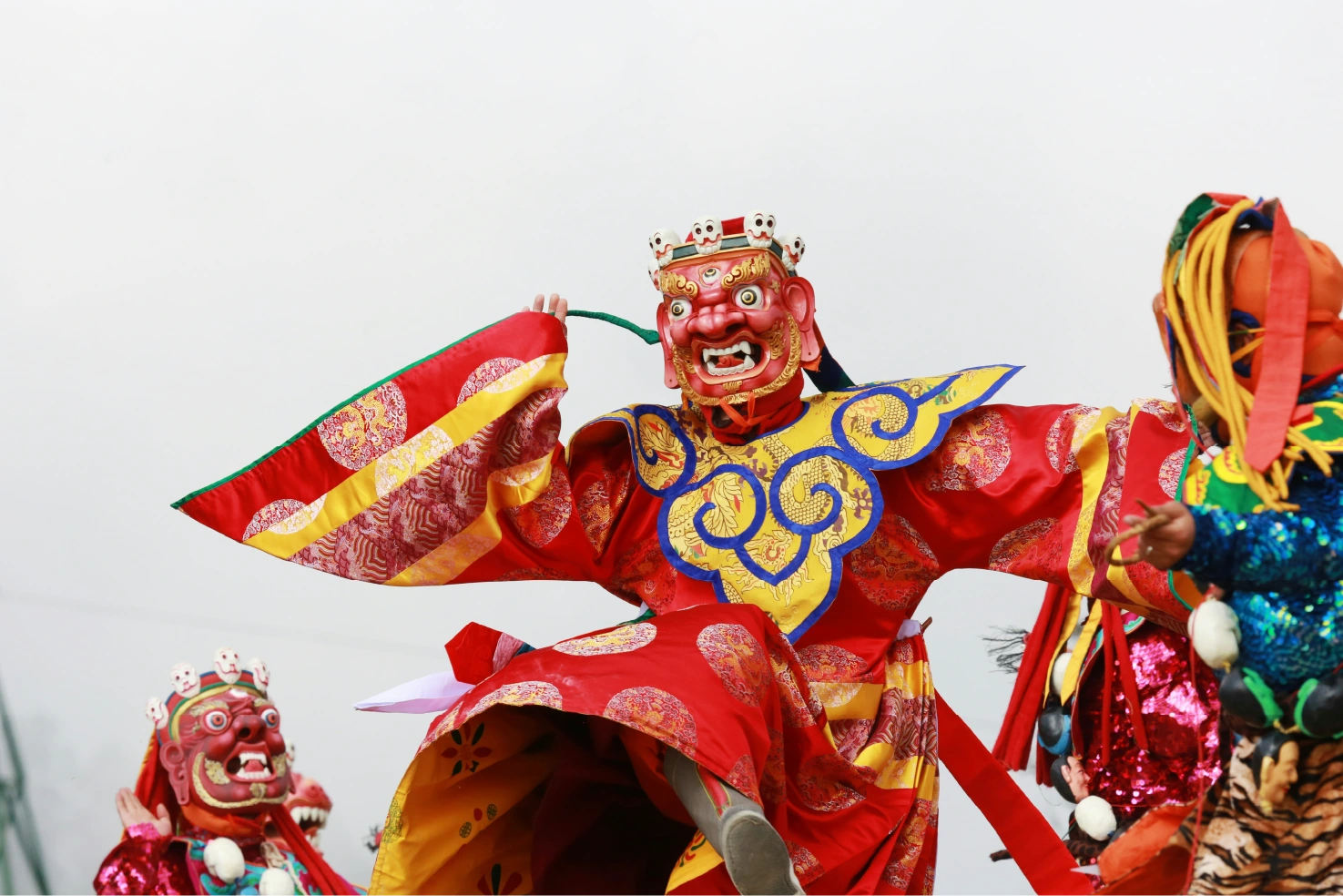
In this respect, so-called miracles are not displays of personal power to gain fame, but methods used to challenge our fixed views of reality. In truth, we are like the frog in the parable of ‘the frog in the well,’ whose entire understanding was shaped by the small space he inhabited. When he finally saw the expanse of the ocean, he could not comprehend it, and so, the story says, his head exploded.
Likewise, our beliefs are shaped by our limited experience. Two hundred years ago, an airplane flying overhead would likely be considered the work of a god or demon. Today, planes are common modes of transport. This shows how ideas that once seemed impossible become ordinary once our frame of reference expands.
That is why miracles, like a flame burning underwater in the case of Pema Lingpa, or handprints left in stone left by awakened beings, shock us. They jolt us beyond our culturally conditioned mental boundaries, compelling us to question the very nature of perception. With sustained practice, we begin to realize that all phenomena arise from the mind, and that none are more solid or real than an illusion, a mirage, or a dream.
In reality, the tantric path of the mahasiddha is one of the great treasures of Bhutan and the Himalayan region. Their legacy offers a complete path to realization, using wisdom, compassion, and unconventional methods that adapt to the needs of each being.
To let this tradition fade under the pressures of narrowly focused Western education, rationalization, materialism, and ideological rigidity would be a catastrophic loss, not only for Bhutan but for all of humanity.

Tantric teachings and practices or the mahasiddhas are not relics of the past, but living pathways to freedom and awakening. Preserving them is not merely an act of cultural conservation, it is a conscious, courageous choice to safeguard a timeless wisdom tradition that awakens the deepest potential within us all.